|
Franziska Gerken I am a PhD candidate working with Laura Leal-Taixé at the Dynamic and Vision Learning Group, TU Munich. In 2024, I completed a research internship at NVIDIA and have since continued my work there as a part-time student researcher. Before starting my PhD, I obtained a Master's in Mathematics from University of Münster and a Bachelor's in Mathematics from Utrecht University. During my Master's, I focused on function field theory, Algebra and Stochastics, and did a minor in Computer Science. For my Master thesis I visited the Mathematical Institute at University of Maryland, College Park. I am fascinated by languages and how they serve as a window into other cultures. In my free time, I like to cycle, run and, cook. I also love latin dancing, especially bachata.
|
|


News
|
ResearchI am interested in Deep Learning and Computer Vision. My research focuses on representation learning for complex temporal and spatial data with applications in neuroscience and climate science. Hereby, I am especially interested in leveraging advanced deep learning architectures from vision and language domains to overcome the challenges posed by real-world data, such as its inherent noise and complex, irregular structure. |
|
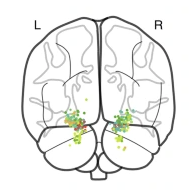
Alana Darcher*, Franziska Gerken*, Johannes Niediek, Marcel S Kehl, Thomas P Reber, Stefanie Liebe, Laura Nett, Attila Racz, Lukas Kunz, Bernhard Staresina, Rachel Rapp, Pedro J Gonçalves, Ismail Elezi, Valeri Borger, Rainer Surges, Laura Leal-Taixé, Jakob H Macke, Florian Mormann Nature Scientific Data (2026) We present the SUMMER dataset: single-neuron spiking activity from 2,286 medial temporal lobe neurons recorded in 29 epilepsy patients while they watched the 83‑minute film “500 Days of Summer,” together with 53 detailed frame‑wise annotations of the movie’s visual and auditory content in an NWB, machine‑learning–ready format. This resource enables population‑level and single‑unit studies of naturalistic human cognition, including how characters, locations, and event boundaries are represented in medial temporal lobe activity. paper | code |
|
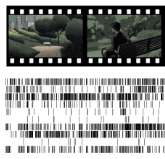
Franziska Gerken*, Alana Darcher*, Pedro J Gonçalves, Rachel Rapp, Ismail Elezi, Johannes Niediek, Marcel S Kehl, Thomas P Reber, Stefanie Liebe, Jakob H Macke, Florian Mormann, Laura Leal-Taixé eLife (2025) We present a novel approach for decoding dynamic and naturalistic stimuli from single-neuron activity in the human medial temporal lobe. Our method leverages advanced deep learning techniques to extract meaningful representations from interconnected populations of neurons, enabling us to reliably predict the occurrence of semantic features of the movie being watched. paper | code |
|
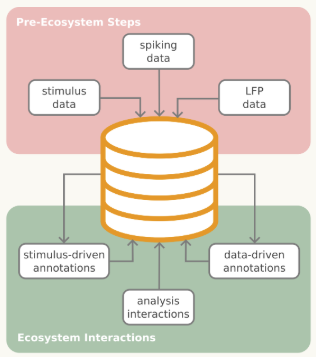
Darcher, A., Rapp, R., Müller, T.T., Gerken, F., Lappalainen, J.K., Dehnen, G., Kehl, M.S., Liebe, S., Leal-Taixé, L., Mormann, F., Macke, J.H. In review. Epiphyte is a Python toolkit with a relational database for analyzing neural activity during naturalistic stimuli such as movies or podcasts, enabling flexible workflows and collaborative database access. paper | code | docs |
|
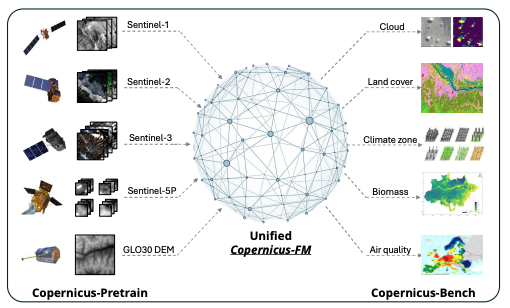
Yi Wang, Zhitong Xiong, Chenying Liu, Adam J. Stewart, Thomas Dujardin, Nikolaos Ioannis Bountos, Angelos Zavras, Franziska Gerken, Ioannis Papoutsis, Laura Leal-Taixé, Xiao Xiang Zhu ICCV 2025 We introduce Copernicus-FM, a unified Earth observation foundation model that jointly handles all major Copernicus Sentinel sensors using a single metadata-aware architecture operating in their native measurement domains. We further release Copernicus-Pretrain, a large-scale dataset of 18.7M geospatially and temporally aligned images, and Copernicus-Bench, a diverse benchmark suite that lets us systematically evaluate how one foundation model supports downstream tasks from surface monitoring to atmospheric analysis. paper | code |
|
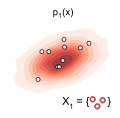
Sebastian Bischoff, Alana Darcher, Michael Deistler, Richard Gao, Franziska Gerken, Manuel Gloeckler, Lisa Haxel, Jaivardhan Kapoor, Janne K Lappalainen, Jakob H. Macke, Guy Moss, Matthijs Pals, Felix C Pei, Rachel Rapp, A Erdem Sağtekin, Cornelius Schröder, Auguste Schulz, Zinovia Stefanidi, Shoji Toyota, Linda Ulmer, Julius Vetter TMLR (2024) We provide a practical guide to four widely used sample-based statistical distances for evaluating scientific generative models—Sliced-Wasserstein, classifier two-sample tests, maximum mean discrepancy, and Fréchet Inception Distance. We clarify their intuition, strengths, and limitations, and show on real scientific generative models how different choices can lead to divergent conclusions, helping researchers select and apply these distances more reliably in practice. Equal contribution across all authors.paper | code |
|
This website's source code is from Jon Barron. |